This guide explains how Jocilene should be evaluated in procurement and quality planning, with an objective lens on sourcing, risk control, and performance expectations. Jocilene is commonly discussed in specialist supply contexts, where consistent documentation, traceability, and compliant handling matter. The background sections clarify why verification steps, supplier capability, and storage conditions are central to dependable outcomes.
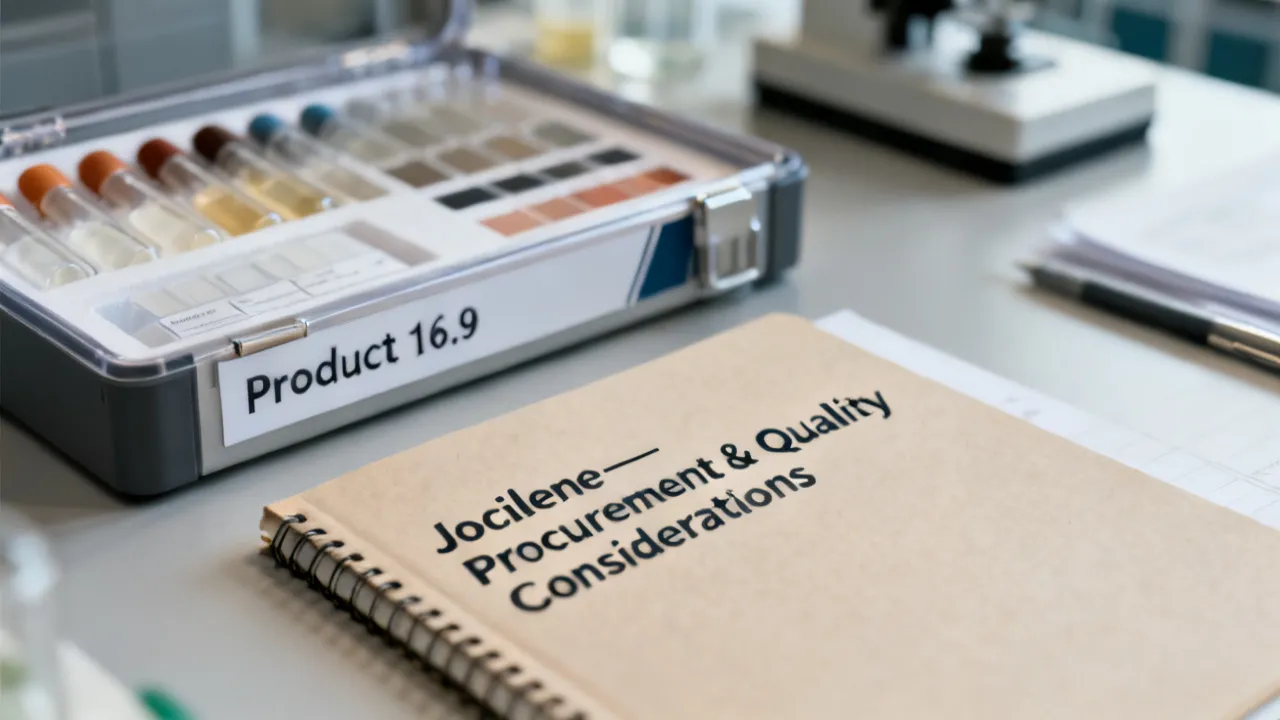
When planning to acquire Jocilene, the very important step is not simply choosing a supplier—it is building a practical evaluation process that confirms identity, quality consistency, documentation quality, and handling compatibility. In procurement and operations, small differences in formulation, packaging, labeling accuracy, and storage conditions can meaningfully affect downstream usability and user confidence. For that reason, you should treat Jocilene as a managed supply component: verify before purchase, confirm upon receipt, and standardize handling and records afterward.
From an industry perspective, buyers who reduce variability typically do three things early: (1) define acceptance criteria in writing, (2) require verifiable documentation tied to the exact lot or batch, and (3) align logistics and storage requirements with the supplier’s stated conditions. This approach supports compliance-minded procurement practices and reduces avoidable rework.
Note: The keywords provided here include only “Jocilene.” No additional price, supplier, or location specifics were included, so this article focuses on a rigorous, generally applicable procurement and quality framework rather than unverified figures or claims.
In specialized procurement conversations, a term like Jocilene often functions as a product or material identifier used to coordinate buying, receiving, inventory, and documentation. Because such identifiers can refer to different grades, formulations, or packaging configurations depending on the supplier, the baseline question for any buyer is: What exactly is being supplied—down to specification and lot-level traceability?
In objective terms, the value of a procurement standard is that it clarifies these questions before money changes hands. That clarity helps teams avoid mismatches such as incorrect concentration/grade, missing certificates, or incompatibilities with the receiving environment.
To evaluate responsibly, you need to treat the product name as a starting point—not a final proof. Many materials have “house names,” tradenames, abbreviations, or catalog titles that may remain constant while the underlying grade, additive package, or manufacturing route changes. Even when two suppliers both label their item as Jocilene, the buyer must verify whether the specification, performance targets, and packaging constraints are actually aligned.
For materials that are used in processes rather than purely decorative contexts, quality is rarely “one-size-fits-all.” Even when a product name is the same, differences can appear due to:
From an industry expert viewpoint, these are not “nice-to-haves.” They are operational risk levers. When documentation and traceability are inconsistent, teams lose the ability to diagnose issues quickly if performance deviates. When handling guidance is unclear, teams are more likely to introduce variability after receipt.
Quality and traceability also matter because they directly affect:
Before placing an order for Jocilene, set a structured request package. At minimum, you typically want the supplier to provide:
These elements allow you to compare supplier claims against objective paperwork and plan receiving workflows that check for mismatches early.
To strengthen your request, consider also asking for:
When you request these items consistently, you create a measurable baseline against which to evaluate the supplier’s reliability.
Even if documentation looks complete, verification at receipt prevents expensive downstream problems. For Jocilene, a typical “first-week” checklist should include:
In practice, many quality failures are procedural, not technical—created by skipped verification steps or incomplete recordkeeping. Treating Jocilene as a controlled input improves repeatability.
It also helps to define what happens when the “first week” reveals an issue. For example:
By pre-defining actions, you avoid ad hoc decisions that vary by shift, manager, or urgency.
In professional procurement, “quality” is sustained by systems rather than slogans. Buyers frequently use standardized documentation frameworks and quality management approaches aligned to recognized models. While the exact compliance pathway depends on your industry and jurisdiction, the general principle remains consistent: traceable documentation, controlled handling, and defined acceptance criteria are the backbone of dependable supply chains.
For background perspective, international quality management practices often reference ISO-style thinking (e.g., documented procedures, traceability, corrective actions). In addition, safety information exchange practices in industrial contexts generally rely on standardized hazard communication approaches such as those governed by SDS conventions. These themes are widely used because they reduce ambiguity across organizations.
Source note (general): For readers who want a high-level reference on quality management concepts, the International Organization for Standardization (ISO) provides widely used frameworks such as ISO 9001 (quality management systems). For hazard communication concepts, the globally recognized SDS/hazard communication convention is commonly referenced through the UN Globally Harmonized System (GHS). These references support the objective idea of documentation and controlled processes—without asserting anything specific about Jocilene’s properties.
Even if you are not directly certified to a formal standard, the logic of structured quality management applies. You can translate those ideas into practical internal SOPs:
The table below compares common procurement conditions teams apply when managing materials like Jocilene. It is designed as a neutral decision aid; your exact requirements should be adapted to your internal policy and regulatory obligations.
| Category | Buyer Condition to Implement | Supplier Evidence to Provide | Why It Matters |
|---|---|---|---|
| Identity & Grade | Confirm exact grade/specification and intended use | Specification sheet and product identity details tied to the lot | Prevents mismatch between product names and real formulations |
| Lot Traceability | Require lot/batch matching across container, papers, and certificates | Lot number continuity and batch-specific documents | Enables diagnosis if performance deviates |
| Certificates | Define which documents are mandatory before release | COA/CoC (as applicable) and any relevant compliance documentation | Supports objective acceptance and audit readiness |
| Handling & Storage | Set receiving and storage SOPs aligned to supplier instructions | Documented storage conditions, shelf life guidance, packaging handling notes | Reduces performance drift caused by environment or mishandling |
| Packaging Integrity | Inspect seals and packaging on arrival; quarantine if damaged | Clear packaging description and expected transport robustness | Prevents contamination or partial loss during transit |
| Change Control | Require notification for formulation/spec changes affecting compatibility | Change notices and updated documentation by effective date | Maintains process consistency over time |
| Quality Escalation | Define rejection/return criteria and corrective-action workflow | Root-cause support, CAPA approach, and replacement policy clarity | Reduces downtime and repeated issues |
Below is a step-by-step approach you can adapt for managing Jocilene in a professional supply workflow. The sequence emphasizes control points that help reduce risk.
To make this workflow robust in daily operations, consider how each step will be executed by your teams. For example, define:
To keep the procurement of Jocilene operationally stable, decide the following before the first order cycle:
“Decide up front” is important because once you are under production pressure, it is easy to accept exceptions that erode control. A pre-defined decision framework reduces the chance of informal approvals.
Additionally, determine whether you will:
Receiving documentation is essential, but responsible evaluation often extends beyond certificates. If you want to reduce the probability of encountering a problematic Jocilene lot, you should evaluate suppliers holistically.
Practical dimensions of supplier evaluation include:
A mature supplier will typically demonstrate these qualities by having systems in place: documented production controls, stable labeling processes, and standardized communication for documentation delivery and corrections.
From a buyer perspective, you can score supplier performance across orders using objective metrics such as:
These metrics let you decide whether to continue, tighten inspections, or switch suppliers. This is far more effective than relying on impressions or isolated experiences.
Acceptance criteria define the boundary between “release” and “hold/reject.” Without clear criteria, teams interpret quality subjectively, leading to inconsistent decisions. A strong acceptance criteria document for Jocilene usually includes multiple layers.
Consider the following example categories (adapt to your context):
If your downstream process is sensitive, you may require additional receiving checks. The key is that you specify them in advance and tie them to defined criteria, not to urgency.
Acceptance criteria should also include “how you measure.” For instance, if you require that documentation must match the lot, specify whether you verify using scanned lot IDs, manual transcription, barcode systems, or certificate document control IDs.
Handling compatibility is often overlooked because it doesn’t always manifest immediately. Yet many quality issues appear over time due to storage conditions and handling practices. For Jocilene, storage and handling should be treated as part of the “quality system,” not a purely logistical task.
To evaluate compatibility responsibly, you should confirm:
In practical terms, compatibility includes your internal storage practices. Even if the supplier instructs specific storage conditions, those instructions are only as reliable as your facility’s ability to follow them. Therefore, you should align:
A responsible buyer also ensures that operators have clear instructions. Mislabeling or incorrect storage placement can create the illusion that quality is inconsistent, when the root cause is actually handling variability.
Packaging integrity is a common failure point that can be managed with consistent receiving inspection and clear quarantine triggers. Packaging failures can include:
To manage this, create an inspection procedure that is repeatable. For example, the procedure might require:
In addition to your inspection, work with your supplier on packaging robustness. Ask whether the supplier can provide packaging descriptions and rationale, such as protective layering, moisture barriers, or tamper-evident features. A supplier who can explain packaging choices is often better positioned to help when issues arise.
Documentation quality is more than having a certificate—it is about whether the documentation is correct, complete, and traceable to the exact lot you received. Buyers often struggle because certificates can be “similar” across lots, and errors may slip in if the certificate is not truly lot-specific.
For Jocilene, aim for documentation that is:
It can also help to define internal documentation handling practices:
When receiving records are clean and structured, investigations become faster. When records are scattered or incomplete, the cost of troubleshooting grows quickly.
Not every lot will be perfect, and not every discrepancy is catastrophic. What matters is your escalation and corrective action framework. A responsible buyer defines how to respond when Jocilene does not meet acceptance criteria or when documentation does not match the received product.
Key elements of a quality escalation workflow include:
In corrective action terms, you want evidence-backed statements, not generic reassurances. CAPA-oriented thinking emphasizes prevention of recurrence. That means your supplier should address not only “what happened” but also “what changed in the system so it doesn’t happen again.”
From a buyer standpoint, you should also evaluate whether the issue is isolated or systemic. If multiple lots show the same labeling issue, you might tighten receiving inspection. If multiple suppliers show repeated problems, you might revisit your spec clarity or ordering process.
Change control is a major source of silent drift. Even if each shipment comes with documentation, buyers can be surprised by spec changes or packaging updates that affect performance or handling.
To evaluate Jocilene responsibly, include change control requirements in your procurement policy. Common expectations include:
Internally, you also need to manage the impact of those changes. For example:
A robust system prevents “surprise drift,” where a new spec version gets introduced without proper internal awareness. That drift can lead to inconsistent downstream results that are mistakenly attributed to process issues.
Testing at receiving is sometimes expensive or time-consuming, especially if verification requires specialized equipment or skilled technicians. A risk-based approach can help you balance cost and safety.
Risk factors that might justify additional verification include:
On the other hand, if a supplier has a strong history of consistent traceable documentation and packaging integrity, you might limit verification testing while still verifying documentation and lot matching. The key is that you document the basis of your risk-based decisions.
Even if you do minimal testing, you should still perform core receiving checks: identity confirmation, packaging inspection, storage alignment, and documentation archiving. Those checks are foundational and often low cost compared to the potential impact of failures.
Evaluating Jocilene responsibly does not stop at the warehouse door. To fully realize traceability and quality control benefits, your receiving records must integrate with how the material is actually used in the process.
Consider these operational integration practices:
When integration is weak, the organization loses one of the most valuable benefits of traceability: the ability to connect quality issues to the lot and documentation that created them.
Archiving is not just “saving files.” It is creating a structure where anyone can quickly retrieve the evidence associated with a particular lot. This is crucial during investigations and audits.
A retrieval-ready batch history typically includes:
If you build the batch history system early, you reduce friction later. When teams can locate the lot evidence quickly, they spend more time solving problems and less time searching for documents.
Below are examples of common discrepancy scenarios and how a responsible organization can respond. These are conceptual examples meant to guide your internal SOP decisions.
Scenario A: Lot number mismatch
Scenario B: Damaged packaging
Scenario C: Incomplete documentation
Scenario D: Change introduced without notice
These scenarios emphasize the same principle: consistent responses are more important than improvisation. Improvisation can create untraceable decisions that later become difficult to defend during audits or investigations.
Organizations sometimes face pressure to move quickly—especially when production schedules are tight. However, speed without control can backfire. A responsible procurement process for Jocilene should balance timeliness and risk.
A practical way to do that is to design controlled release pathways, such as:
Even if you allow conditional pathways, document the decision rationale. This protects the organization and helps prevent inconsistent decision-making across personnel.
Communication with suppliers should be structured and lot-specific. Generic complaints lead to generic responses, which do not solve root causes. When you contact a supplier about Jocilene, include:
When communication is structured, suppliers are more likely to provide actionable evidence. That evidence then supports internal decisions and reduces downtime.
Even the best procurement SOPs fail if people don’t know how to execute them. Responsible evaluation of Jocilene depends on training and accountability for key roles:
Training should include practical exercises like “what to check on a certificate,” how to confirm lot matches between shipping papers and container labels, and what to do when something doesn’t align. The goal is to create repeatable habits.
Inventory management is directly connected to quality. If Jocilene is stored and issued without proper lot segregation, your traceability breaks and your risk control weakens.
Consider integrating these practices:
When inventory is managed this way, you also reduce the probability of using an unapproved lot during emergencies.
Responsible procurement evaluation often aims to support audits—internal or external. A well-run system means that when someone asks, “How do you know this Jocilene lot is the one you intended, and how do you know it met your criteria?” you can answer with evidence.
Evidence readiness typically requires:
When evidence is well organized, audits become less stressful and more productive. Auditors can verify the logic of your process instead of trying to reconstruct it from scattered records.
To help you evaluate Jocilene responsibly, it’s useful to highlight common pitfalls that lead to avoidable quality failures:
A mature procurement organization treats these as design failures to be prevented through SOPs, training, and systems.
Verify that the lot/batch number on the container matches the shipping documents and certificates. Then confirm packaging integrity (seals, damage, leakage). Finally, ensure the storage conditions you can provide match the supplier’s handling guidance.
No. A product name alone may not specify grade, formulation details, or intended use. You should verify the exact specification and document evidence tied to the same lot you received.
Commonly, suppliers provide lot-specific certificates such as a COA/CoC and specification sheets. You may also need safety and handling information (e.g., SDS-style guidance) appropriate for your facility’s compliance requirements.
Use acceptance criteria, require lot traceability, standardize receiving/storage procedures, and maintain batch-level records. If your downstream process is sensitive, consider performing verification checks aligned with your internal policy.
Review documentation whenever you change suppliers, grades/specifications, or storage/logistics assumptions. Also request update notices if the supplier changes formulation, packaging, or manufacturing processes that could affect fit-for-use.
Quarantine the lot per your internal nonconformance procedure. Then contact the supplier for clarification using the lot/batch identifiers. Do not release the material until the discrepancy is resolved according to your acceptance policy.
Not safely. Standardization should follow the supplier’s stated storage and handling requirements. If conditions are uncertain, treat the lot as nonconforming until requirements are confirmed.
For general quality management principles, ISO 9001 is widely referenced. For hazard communication concepts and SDS conventions, the UN GHS framework is commonly cited. These provide objective guidance on process and documentation expectations, without making claims about Jocilene’s specific characteristics.
Jocilene can be managed effectively when procurement and quality planning treat it as a controlled input rather than an informal purchase. By focusing on verified identity, lot traceability, document completeness, and storage compatibility, you reduce operational variability and improve audit readiness. If you build your process around acceptance criteria and consistent receiving workflows, your team gains confidence that each lot behaves predictably within your defined use context.
If you share your industry context (e.g., manufacturing, lab use, specialty supply chain) and the exact specification or grade you mean by “Jocilene,” I can help tailor the acceptance criteria and receiving checklist more precisely.
A Guide to Cost-Efficient Small Electric Cars for Seniors

Mastering Debt Consolidation: Boost Your Credit Score and Manage Interest Rates

Your Guide to Loans, Credit Checks, and Interest Rates

Affordable Independent Living: Finding the Right Senior Housing

Guide to Senior Living Apartments: Affordable and Comfortable Environments

Leasing a Car: Expert Tips for Your Next Vehicle

Maintaining Oral Health After Tooth Loss with Dental Implants

Maintaining Oral Health with Dental Implants for the Elderly

Cxxxvldlo Logistics Guide for Smarter Supplier Decisions

Understanding Jocilene: Use, Sourcing, and Evaluation
Jocilene is a product commonly evaluated for its intended use, ingredient approach, and sourcing reliability. This guide reviews what “Jocilene” refers to in practical terms and outlines objective criteria buyers can apply—especially when comparing suppliers and assessing quality signals—so readers can make decisions based on evidence, not marketing.
Understanding Jocilene: Procurement, Quality, and Guidance
This guide explains how Jocilene should be evaluated in procurement and quality planning, with an objective lens on sourcing, risk control, and performance expectations. Jocilene is commonly discussed in specialist supply contexts, where consistent documentation, traceability, and compliant handling matter. The background sections clarify why verification steps, supplier capability, and storage conditions are central to dependable outcomes.

04978681642: Industry Guide to Verified Supplier Contacts
This guide explains how to evaluate a supplier contact tied to 04978681642, focusing on verification, service-fit, and risk controls. Objectively, the keyword sequence reflects a common buyer workflow: collecting a phone number, confirming legitimacy, and aligning requirements with the supplier’s capabilities. You’ll find a practical checklist, comparison table, conditions, and FAQs to support safer decisions.

EDIONE SOUSA PRATES: Professional Sourcing and Supply Guide
This guide explains how EDIONE SOUSA PRATES approaches reliable product sourcing and vendor coordination, focusing on practical procurement considerations rather than speculation. It provides objective background on how supplier selection, documentation, and fulfillment workflows affect quality and delivery outcomes, using industry-standard requirements and decision criteria relevant to buyers seeking consistent supply.

Revisional Porto Alegre Guide for Smarter Corrections
This guide explains revisional processes in “nearby” Porto Alegre, focusing on how to structure reviews, validate documents, and coordinate with qualified suppliers. It provides objective background on the term “Revisional Porto Alegre,” typical decision points in correction workflows, and practical considerations for stakeholders. Then it offers a comparison table, a step-by-step approach, and conditions readers should verify before proceeding.

Matheus Tobias Meireles: Professional Insights and Context
This guide examines who Matheus Tobias meireles is and how to approach his work and references responsibly in professional settings. It provides objective background on the name’s visibility, outlines practical ways to verify related claims, and explains how suppliers, pricing cues, and location context can be interpreted without overreaching—helping readers make sound decisions.
