English

This guide explains how a Talkdesk Chatbot supports customer service operations, from use-case selection to secure deployment and performance governance. It provides an objective background on conversational AI, contact-center automation, and why bot-to-agent workflows matter for compliant, consistent service outcomes.

Deploying a Talkdesk Chatbot can streamline first-response handling, reduce repetitive inquiries, and improve consistency—as long as you design it around clear intents, supported knowledge sources, and a reliable handoff to agents. For customer-service leaders, the strategic value is not “automation for its own sake,” but predictable resolution paths, measurable containment goals, and safe escalation when a case is complex.
In day-to-day service operations, the biggest change is that customers get an immediate answer—often within seconds—instead of waiting in a queue for an agent to read their message, search a help article, confirm an account, and then respond. That shift affects perception, workload distribution, and even how agents spend their time. When done well, a Talkdesk Chatbot becomes an always-on front line for routine requests: order status checks, appointment confirmations, password resets, return initiation steps, troubleshooting basics, and policy explanations. When done poorly, it becomes a frustrating “dead end” that asks for unnecessary details, repeats itself, or escalates too late—forcing customers to re-explain themselves to a human.
So the real question for stakeholders is not “Will AI reduce calls?” but “What service promises should customers reliably receive through this channel, and what internal processes must be in place to keep those promises?” The operational design choices you make before configuration—intent scope, knowledge governance, integration reliability, identity verification, and agent handoff—determine whether the chatbot behaves like a helpful concierge or like a risky experiment.
From an industry-practitioner perspective, the very credible outcomes typically come from three levers:
In practice, these levers reduce friction for customers while giving supervisors better visibility into why contacts arrive and how they are resolved. But they also influence how you measure performance, because a chatbot doesn’t create value by “deflecting” contacts alone. It creates value by improving resolution reliability—the probability that the customer gets to the right next step without unnecessary effort.
To make those outcomes manageable, you’ll want to define an operating model that includes:
When leaders adopt that operating model, a Talkdesk Chatbot becomes predictable and therefore governable—exactly what service organizations require when the bot touches real customer data, real transactions, and real customer emotion.
A Talkdesk Chatbot is generally part of a broader customer engagement stack used in modern contact centers. While implementations vary by business model, the core capabilities usually include:
Instead of treating chat as a standalone feature, strong deployments embed the chatbot into the same service governance you use for phone and email—so quality stays consistent.
In many organizations, the chatbot is not “an AI that answers questions,” but a workflow orchestration layer that sits between the customer and the service systems you already trust. That typically means:
That integration orientation is what allows a chatbot to reduce effort rather than merely provide information. Knowledge articles alone can explain a policy, but they can’t always update a case, check eligibility, or provide a live status. When the bot can do the right workflow, customer satisfaction tends to rise because the bot “finishes the job,” not just “talks about the job.”
Customers do not evaluate “AI” in abstract terms; they evaluate the conversation. If answers are vague, repeated, or ask the customer to restate details, satisfaction drops—even if the bot is technically “working.” A well-governed Talkdesk Chatbot should:
“Bot quality” shows up in small moments, such as:
Because service interactions carry emotion—waiting frustration, fear of being charged incorrectly, urgency about shipping delays—customers forgive minor uncertainty less than they forgive avoidable confusion. That’s why operational leaders should treat chatbot quality assurance as part of customer experience management, not as a purely technical deployment step.
Industry top practice starts with a service blueprint, not a chatbot script. Before implementation, clarify:
Beyond those basic decisions, you should also define what success looks like at the conversation level, not just at the contact level. Two examples illustrate the distinction:
Even if both conversations “end” without an agent, only the first conversation likely reduces overall customer effort. If your measurement focuses only on containment, you might wrongly conclude success when you’ve merely shifted work back onto customers.
Operationally, you should also specify “customer journey boundaries,” such as:
These boundaries are critical because chat conversations are messy. Customers may type partial information, use informal language, or be angry. Without clear boundaries, a bot can either become too conservative (escalating too often) or too permissive (making changes it shouldn’t).
Your final cost for a Talkdesk Chatbot typically depends on the commercial plan, the channels enabled, integration scope, and expected usage. Rather than relying on unverified public figures, organizations usually evaluate pricing using vendor documentation and a scoped implementation proposal. Key procurement factors that commonly influence price include:
Supplier note: In procurement workflows, the supplier is commonly the platform vendor or a certified implementation partner. Confirm the roles in your contract—who builds the conversational flows, who maintains them, and who is accountable for operational changes.
Procurement is where teams often fail to clarify the hidden labor behind “automation.” Even when the platform is licensed, you still pay (in internal time or external services) for:
Therefore, when evaluating pricing, ask for deliverables and timelines. For instance: How many use cases are included in the initial build? What is the expected turnaround for content updates? Are there included hours for integration testing? What reporting is available out of the box, and what needs configuration?
In addition, ensure procurement includes security review obligations. A chatbot may process personal data and conversation transcripts that fall under privacy obligations in many jurisdictions. Clarifying the security posture early reduces cost later because it prevents rework.
The fastest projects are usually the ones that prevent avoidable rework. Below is a pragmatic flow that contact-center teams can adapt.
At a high level, the work typically follows an iterative pattern: identify a manageable use case, build the conversation and knowledge foundation, integrate for live workflows, test safety boundaries and escalation, then launch with monitoring and improvement. While the order of tasks can vary, the principle remains the same: the chatbot should be treated as a production service with acceptance criteria, ownership, and operational guardrails.
The table below compares typical implementation phases, the source of requirements, and the conditions teams must meet. It is written to help you align stakeholders (service, IT, security, and operations) before configuration begins.
| Phase | Primary Source of Inputs | Recommended Outputs | Conditions / Requirements |
|---|---|---|---|
| 1. Use-case selection | Customer support analytics, ticket taxonomy, and QA call/chat reviews | Top intents list, success criteria, exclusions, escalation rules | Intents must map to owned knowledge and supported workflows; avoid sensitive topics without approval |
| 2. Knowledge design | Policy owners, help center content, and service operations documentation | Curated articles/FAQ sets, response style guide, fallback text | Content must be current, versioned, and reviewed on a defined cadence |
| 3. Conversation flows | Business analysts and contact center supervisors | Intent prompts, slot-filling fields, guardrails, clarification questions | Ask only for required data; ensure consistent language and traceable decision paths |
| 4. Integrations | IT/system owners (CRM, case management, order systems) | Connected workflows, status retrieval, case creation/update | Integration APIs must be monitored; define error handling and safe degradation |
| 5. Handoff to agents | Operations + workforce management | Agent-ready summaries, context handover fields, routing logic | Customer identity and case linkage must be accurate; define SLA for escalation |
| 6. Security, privacy, and audit readiness | Information security, legal/compliance, and data protection teams | Data handling rules, consent/notice text, logging policy | Apply least-privilege access; ensure retention and audit requirements are met |
| 7. Testing and QA | QA specialists + representative user journeys | Test suites, regression checks, human review rubric | Include edge cases, language variations, and “angry customer” scenarios |
| 8. Launch and optimization | Contact center performance monitoring | Dashboards, weekly review process, content updates queue | Govern a feedback loop; update intents and knowledge based on real outcomes |
Many deployments move quickly from “we bought a chatbot” to “we configured a flow,” and then they discover alignment problems late—usually during testing or early production. A hidden risk is that stakeholders will interpret “done” differently. For example, service leadership may define success as customer satisfaction improvement, while IT may define success as integration stability, and QA may define success as passing acceptance tests for a limited set of scenarios.
To prevent this, you should explicitly define a Definition of Done that includes:
If you include these criteria early, the project will feel slower at the start but faster later because fewer assumptions create rework.
Even with excellent conversational design, deployments can underperform if conditions are not in place. The very common “hidden constraints” include:
These constraints are not only technical; they are organizational. For instance:
To address them, create a lightweight operational rhythm even if you start small. A typical rhythm might include weekly review of escalation reasons, monthly knowledge audits for high-volume intents, and periodic load/stress tests for integrated workflows.
Also remember that chat behavior depends on language and customer framing. Some customers will start with “I want to cancel,” while others will describe symptoms: “I was charged twice,” “My package says delivered but I didn’t receive it,” or “I can’t log in.” Your bot needs a mechanism to interpret multiple phrasings as the same intent—or decide it cannot safely proceed and escalate.
In mature contact centers, a chatbot is treated as a living service with a QA program similar to other customer-facing channels. Common governance mechanisms include:
These practices align quality with operational realities and help maintain a stable customer experience.
To make governance real, you need a structure for accountability. Consider assigning:
A practical approach is to maintain a “quality backlog” where each issue type—wrong answer, missing info request, poor escalation—has a severity and priority. Then you release improvements on a schedule and track whether the changes reduce specific failure tags.
It’s also important to recognize that “accuracy” includes the ability to ask the right question. If the bot doesn’t know enough to answer, it must ask for the missing information or escalate. A conversation can still be “accurate” even if it doesn’t fully resolve without an agent, as long as the next step is clear and the escalation is timely with context.
Begin with high-volume, low-complexity intents that map cleanly to existing knowledge and workflows—such as order status inquiries, basic returns policy questions, appointment confirmations, or password reset guidance. Avoid disputes or highly sensitive decisions in the first rollout.
To decide “high volume” and “low complexity,” look beyond raw ticket counts. Complexity is often related to how often agents have to interpret ambiguous requests or perform exception handling. For example, order status queries can be complex when customers lack order IDs, when multiple accounts exist, or when orders are split across shipments. Even then, you can still start with status inquiries if you have a reliable identity verification step and a robust workflow for “missing order ID.”
A useful method is to classify candidate intents into categories:
Start with the first three categories, especially when you can clearly define the path and required inputs.
Use a combination of rules: confidence thresholds, explicit customer requests, sentiment signals, and predefined keywords indicating complexity (e.g., “cancel my contract,” “claim,” “legal,” or “chargeback”). Also define a time-based SLA so customers do not wait too long when the bot is stuck.
Beyond those rules, consider designing handoff as a conversation state rather than a single event. For instance:
Another critical concept is to define “escalation fairness.” If customers frequently ask for a human but the bot keeps them in a loop, trust erodes rapidly. A common best practice is to include an explicit “talk to an agent” pathway early in the flow for sensitive issues—rather than forcing customers to complete multiple steps first.
Deflection typically increases as customers become comfortable with the channel and as the bot’s knowledge improves. Performance should be tracked against clear success metrics, and expectations should account for learning cycles during optimization.
It can be tempting to set a target like “20% containment in the first month.” But containment is a lagging indicator affected by:
More meaningful early metrics might include:
Over time, as coverage improves and customers learn what the bot can do, containment should rise, but only if resolution quality remains high.
Ground responses in curated, versioned content owned by operational stakeholders. Implement review workflows, use fallback behaviors when information is missing, and maintain a QA cadence. Accuracy is less about “model capability” and more about governance.
To make governance tangible, you can implement “content readiness” requirements:
Additionally, accuracy depends on conversation design. For example, “return policy” answers may require conditions like purchase channel, item category, or subscription type. The bot should ask clarifying questions when those variables matter—rather than giving a single policy statement that might not apply.
Capture intent classification results, resolution outcome, escalation reasons, knowledge article used (if applicable), time-to-first-answer, and transcript segments that led to failures. Ensure analytics align with privacy requirements and internal audit standards.
In practice, reporting needs to support several audiences:
Therefore, capture data with purpose. You might not need to store every raw message indefinitely; you might store transcript excerpts, anonymize identifiers where possible, and maintain access controls. The key is to ensure that improvements are based on evidence, not anecdotes.
Typically, the supplier (the platform vendor or a certified implementation partner) helps configure the solution, integrate systems, and establish reporting. Your organization should retain responsibility for service policy content and escalation rules to maintain operational control.
When contracts clarify responsibilities, it helps prevent a common failure mode: the organization expects the supplier to be accountable for knowledge correctness, but supplier support can’t verify policy accuracy or manage internal updates. Conversely, the organization sometimes assumes the internal team will do all integration work, but they lack API access or required engineering resources.
A healthy deployment clarifies:
Start with the languages you can support with verified knowledge and human QA. Evaluate translation quality, ensure intent definitions exist per language, and test for culturally appropriate phrasing in support responses.
Multilingual support is rarely just “translate the bot.” For multilingual operations, you should expect differences in:
A practical approach is to launch with one or two languages where knowledge content and agent playbooks already exist in those languages. Then expand gradually, using transcript review to refine intent mapping and response phrasing.
Safety depends on permissions, authentication, and data minimization. Require appropriate verification steps before any account changes or sensitive status retrieval, and apply least-privilege access patterns for backend integrations.
Safety is more than “authentication works.” You also need to consider:
In many real deployments, the bot can be safe while still restricted: for instance, it can retrieve order status with verification but cannot process refunds automatically. This “safe capability design” often increases trust and reduces risk while still delivering meaningful service improvements.
Many organizations look for benchmark statistics when planning chatbot programs. Because results vary widely by industry and use-case scope, it is top to rely on reputable industry research and platform research notes. For example, the contact-center automation landscape is frequently analyzed by analyst firms and industry groups such as:
When you choose specific metrics (containment, average handling time impact, or CSAT changes), validate them using internal baselines and run controlled pilots rather than depending on broad averages.
Because benchmarking can be misleading if taken out of context, it helps to build a scenario-based expectation model. For example, a low-risk use case (password reset) might produce high containment and high satisfaction because it resolves quickly. A more sensitive use case (billing dispute triage) may still be worth automating, but you might expect lower containment because you’ll escalate more often. If you plan according to the scenario, you avoid unrealistic targets that could damage the program’s perceived value.
Even when the logic is correct, tone and cultural expectations influence outcomes. For teams serving customers in “nearby” regions, adjust phrasing to match local customer-service norms—clear, polite language; straightforward next steps; and respect for privacy boundaries. In many markets, customers prefer concise explanations and predictable escalation paths. Adopting that style in your Talkdesk Chatbot scripts tends to reduce frustration and increase successful task completion.
Localization includes not only translation but also:
From an operations perspective, you can create a “tone guide” much like you do for agent scripting. The tone guide should define:
When tone is consistent across channels, the chatbot feels like an extension of the service team rather than a separate interface.
Below are failure modes that expert teams plan around:
These pitfalls often arise from “launch pressure.” Teams sometimes aim for broad intent coverage to create early impact, but doing so increases the chance of unknown scenarios and inconsistent knowledge use. A safer approach is to launch narrower, then expand with evidence.
Consider additional pitfalls that emerge in mature deployments:
Planning around these pitfalls requires both technical testing and operational readiness. In other words, you should treat the chatbot like any other customer-facing service component: it needs reliability engineering, QA, and operational ownership.
To keep measurement objective, define metrics that reflect both efficiency and customer outcomes:
To ensure metrics stand up to scrutiny, be careful about measurement definitions. For example:
One of the most effective quality metrics is a “handoff usefulness score,” which you can derive from agent feedback and transcript comparison. If agents consistently say “I had to ask the customer again,” that’s a sign the bot isn’t passing enough context.
Additionally, consider tracking “retry behavior.” For instance, if customers who used the bot later contact support again for the same issue shortly afterward, your bot may have provided partial information but failed to complete the workflow. That pattern signals that resolution quality needs improvement, not that the bot should be removed.
A mature chatbot program evolves beyond static FAQ responses. Over time, strong teams typically add:
To expand maturity responsibly, you’ll want to define a roadmap that sequences capabilities by risk. A typical maturity progression might look like:
“Good” also means the bot does not just expand functionality, but improves reliability and usability. At maturity, teams focus on:
A key principle in maturity is safe expansion. As capabilities expand to more sensitive domains, you should tighten guardrails: higher confidence thresholds, more explicit confirmations before actions, stronger verification, and more frequent QA sampling.
A Talkdesk Chatbot can deliver meaningful improvements when it is treated as an operational capability with governance—not merely a chatbot “feature.” The very reliable path is to start with focused use cases, ground responses in owned knowledge, implement robust handoff to agents, and establish a consistent QA and optimization rhythm. With that foundation, your chatbot can become a practical extension of your customer service team, improving both responsiveness and consistency for everyday inquiries.
If you want the chatbot to change day-to-day service in a positive way, build it like you would build any other production system that customers depend on: define what it can do, prove it meets acceptance criteria, monitor it continuously, and maintain it with discipline. When you do that, the bot becomes a stable layer of service that reduces effort for customers and supports agents—rather than a fragile experiment that only looks good in a demo.
If you remember one set of takeaways: choose manageable intents first, define escalation early, govern knowledge updates, and measure outcomes that reflect resolution quality—not only deflection. That disciplined approach is what typically differentiates a chatbot that “sounds helpful” from one that genuinely supports customers.
How to Thrive on Dating Platforms for Asian Singles

Unveiling Atranet Innovation

Discovering the Essence of Done Ti

Prepaid Phones Without Monthly Fees

Navigating SEO for Business Success

Understanding Done Ti: An In-Depth Analysis

Understanding Rs Sul Telecom's Role in Internet Provision

Navigating Affordable Dental Implant Options

Exploring Internet Service Options

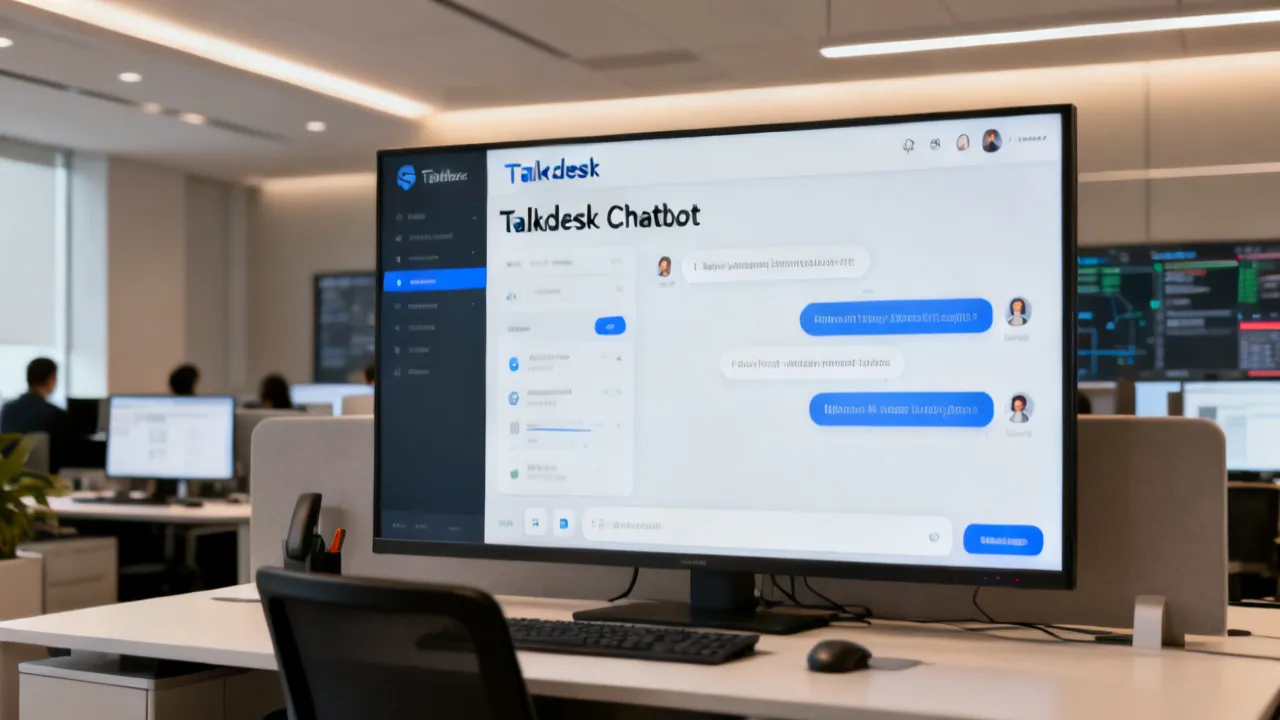
Talkdesk Chatbot Guide for Contact Center Efficiency
This guide explains how a Talkdesk Chatbot can streamline customer interactions, reduce repetitive workload, and improve routing accuracy through conversational workflows. It provides an objective overview of chatbot capabilities, typical integration considerations, and operational top practices, including governance, quality assurance, and metrics selection for contact centers evaluating AI-driven customer service.

A Practical Guide to Talkdesk Chatbot Adoption
This guide explains how to plan, evaluate, and implement a Talkdesk Chatbot for efficient customer service. It reviews the core concepts behind AI-driven conversational support, the operational choices contact centers must make (routing, escalation, and compliance), and how to align the chatbot with existing support workflows. It also includes expert considerations, requirements, and FAQs to support sound decision-making.

Talkdesk Chatbot Implementation Guide for Contact Centers
This guide explains how a Talkdesk Chatbot can enhance contact-center deflection, routing, and customer self-service. It objectively reviews what chatbot-driven workflows do, where they fit in omnichannel CX, and what capabilities to evaluate—such as integrations, escalation rules, and compliance—so teams can implement responsibly with measurable outcomes.
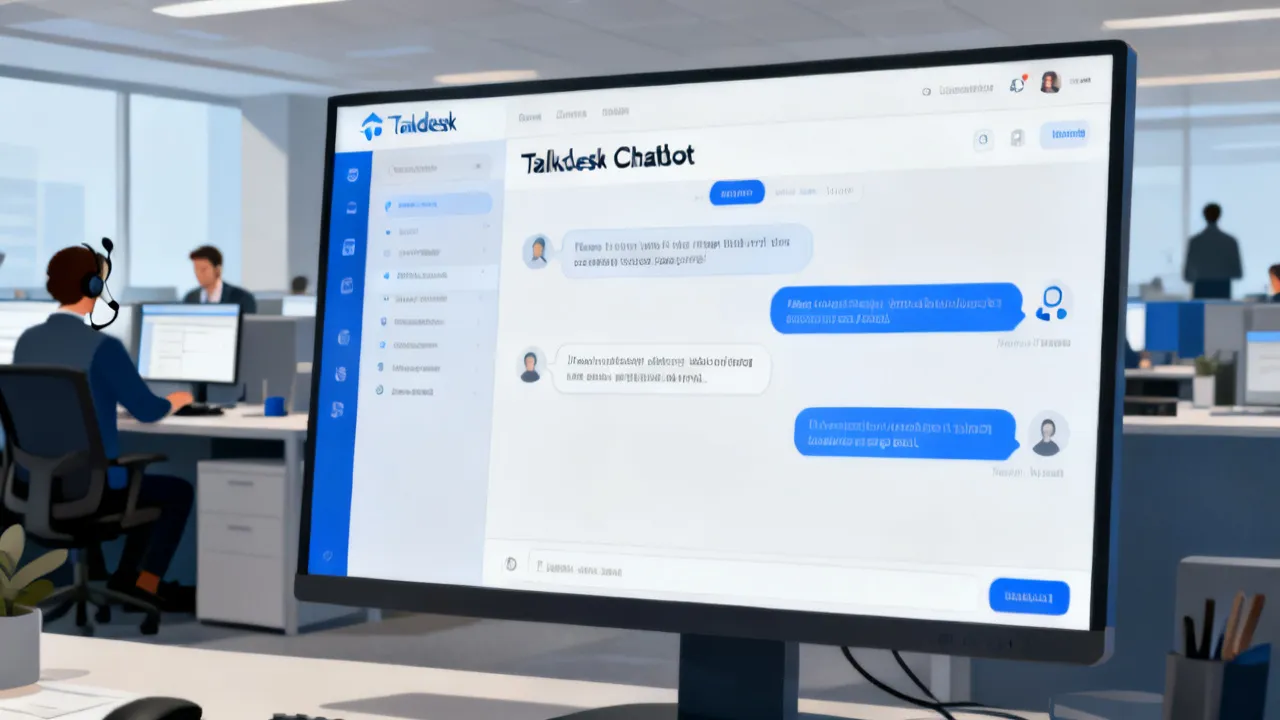
How a Talkdesk Chatbot Improves Contact Center Efficiency
This guide explains how a Talkdesk Chatbot supports faster, more consistent customer service through intelligent conversation flows and workflow automation. Objectively, “Talkdesk Chatbot” refers to an AI-assisted customer support channel integrated with contact-center systems. We review core capabilities, practical implementation choices, and decision conditions so teams can evaluate fit for their support operations.

How to Evaluate a Talkdesk Chatbot for Contact Centers
This guide explains how to assess a Talkdesk Chatbot for real-world customer service outcomes. It outlines objective background on conversational AI in contact centers, how bot interactions integrate with routing, knowledge, and compliance workflows, and what to verify before rollout. You’ll also find practical evaluation steps, requirements, and FAQs to support decision-making.
A Practical Guide to Talkdesk Chatbot Deployment
This guide explains how a Talkdesk Chatbot supports customer service operations, from use-case selection to secure deployment and performance governance. It provides an objective background on conversational AI, contact-center automation, and why bot-to-agent workflows matter for compliant, consistent service outcomes.