This guide explains how vehicle availability shapes fleet operations, from sourcing to scheduling and maintenance planning. It provides objective background on key terms like inventory flow, lead times, and supply-side constraints, then translates them into practical decision criteria. You’ll also find a structured comparison, step-by-step evaluation conditions, and expert FAQs to support procurement discussions with confidence.

Vehicle availability determines whether your organization can meet delivery schedules, manage field operations, or keep customer-facing services running without disruption. In practical terms, it reflects the timeliness and continuity of access to suitable vehicles—accounting for acquisition lead times, maintenance cycles, driver demand fluctuations, and supplier responsiveness. When stakeholders treat availability as a single number, they often miss the drivers behind it; a more rigorous approach helps procurement, operations, and fleet managers align expectations with reality.
To make that rigor meaningful, organizations need to interpret “availability” the way operations experiences it: not as a static stock figure, but as a living capacity that changes with demand, downtime, compliance checks, and the practical details of moving vehicles into (and back out of) service. This is why two fleets can both claim the same headline availability percentage yet behave very differently under stress. The details—handback condition verification, depot location, maintenance throughput limits, substitution rules, and documentation completeness—determine whether that percentage translates into reliable mobility.
In effect, vehicle availability is the operational lever that sits between strategy and execution. Procurement chooses suppliers and contracts; operations schedules work; maintenance converts vehicles into “ready” assets; compliance ensures vehicles can legally move. Availability is the measurable output of all these systems working together. When any one system falters, availability degrades. When the systems are aligned, availability becomes forecastable, and your organization becomes dependable to customers.
In very organizations, vehicle availability is discussed in daily or weekly standups, yet it is actually the outcome of multiple interconnected systems:
From an industry perspective, the very important insight is that availability is dynamic. A fleet can report strong availability today while still being at risk due to upcoming maintenance windows, seasonal usage spikes, or supplier constraints that appear only when orders accumulate.
More specifically, “available” can mean different things depending on the operational context. In some companies, availability includes vehicles that are currently assigned to jobs but expected to return within a workable window. In others, it excludes vehicles until they are fully cleared for handback and compliance checks. In negotiations, some suppliers may treat “reserved” vehicles as available, while fleet managers may treat them as unavailable because the reservation may shift or because the vehicle might require a minor corrective work order before it becomes usable for the next assignment.
Therefore, it is best to define vehicle availability with the same precision you would apply to service-level commitments: availability is a statement about usability against a specific job at a specific time, under an agreed set of conditions.
Decisions around vehicle availability typically influence three areas at once:
Industry top practice is to manage availability as a measurable capability—something you can forecast and stress-test—rather than a reactive outcome.
When availability is weak, organizations often discover the problem through symptoms rather than causes: customers see missed delivery windows; dispatchers see an increase in rescheduling; drivers see friction and confusion; maintenance sees a surge of work; procurement sees churn in re-requests to suppliers. These symptoms are expensive because they generate both direct costs (emergency rentals, additional labor) and indirect costs (lost trust, contract penalties, reputational damage).
Conversely, when availability is treated as a capability, organizations can build confidence with customers and protect margins. A dependable availability system helps ensure that operational plans remain intact even when disruptions occur—such as a late vehicle return, a delayed part, or a sudden demand spike that changes the mix of vehicle types required.
Supplier details matter because vehicle availability is rarely only about whether a vehicle exists. It’s also about whether the supplier can deliver it in the condition, configuration, and documentation your operation requires.
When evaluating suppliers, consider:
Even when pricing is competitive, weak specification matching can reduce effective availability—because unusable vehicles do not improve your operational capacity.
Supplier behavior also influences how availability behaves over time. Some suppliers may meet demand initially but then degrade as they approach their own capacity limits. Others may maintain stable performance because they have buffer stock, robust depot operations, and standardized handback workflows. Your organization’s real risk is rarely captured in headline metrics. Instead, it shows up in edge cases: what happens if you request a vehicle at the last minute, or if a vehicle returns late and requires inspection, or if the equipment you need (such as refrigeration units, tail-lifts, chains, or communication devices) is missing.
Availability is a system-level contract. Your supplier isn’t simply providing vehicles; they are providing the end-to-end operational readiness to convert their assets into your usable capacity. That end-to-end readiness should be part of the evaluation, not an afterthought.
Vehicle procurement discussions often start with price information, but availability is the constraint that can turn an attractive rate into a higher operational cost. For example, a lower per-day price might be offset by:
To keep decisions objective, organizations commonly compare effective cost per usable day (including downtime and substitution delays) rather than only the published rental or procurement price.
However, “effective cost per usable day” is not always enough if your operation values reliability differently across job types. For example, one missed delivery might be tolerable if it occurs outside a high-priority window; a missed delivery in a time-critical scenario may trigger contractual penalties. Therefore, it’s useful to segment availability value by job criticality.
Some organizations also add the cost of failure modes into availability scoring. Failure modes include not just “no vehicle available” but also “vehicle available but not compliant,” “vehicle available but missing equipment,” and “vehicle available but arrives too late to start work.” When you incorporate these failure modes, you get a more accurate decision model that prevents overpromising and protects customer commitments.
In negotiation, this approach helps you avoid vague statements like “we can always get a unit.” Instead, you can ask concrete questions: how quickly can you provide the correct class if we request within a certain timeframe? What is the variance of lead time? What substitution options exist, and how often do they occur?
In real deployments, availability improves when operations and procurement follow a structured workflow. Instead of treating availability checks as a last step, embed them early—ideally at the point where routes, schedules, and job assignments are designed.
A mature planning framework typically covers the lifecycle of a vehicle request. It begins with demand formation (workload, schedule changes, job criticality), then moves through requirement definition (vehicle class, equipment list, compliance needs), and only then proceeds to sourcing actions (requests to suppliers, internal transfers, or maintenance plan adjustments). After sourcing, operations still needs to convert the vehicle into usable capacity by verifying handback condition, confirming documentation completeness, and ensuring the vehicle can be assigned without late-cycle changes.
When organizations skip steps, availability becomes fragile. For instance, if operations schedules jobs without considering known return times, maintenance throughput, or depot transfer constraints, procurement might secure vehicles that later can’t be utilized. Likewise, if procurement confirms availability without verifying specification match and documentation requirements, operations might receive vehicles that are temporarily unusable.
Thus, availability planning should be integrated into the same workflow that manages work orders. Vehicle availability is not a separate activity; it is an operational constraint that must be reflected in planning tools and decision gates.
Before contacting suppliers, ensure internal inputs are consistent and auditable:
This reduces the risk of procurement churn—where a vehicle is “available” but not usable for the specific job, leading to re-requests and delays.
Churn is particularly common when internal teams do not share consistent requirement definitions. For example, one team might request a “7.5-ton truck” while another assumes the operational requirement includes specific axle configuration, height clearance, brake type, or cargo compartment features. Even minor mismatches can cause delays because the vehicle cannot be cleared for the route or must be swapped again.
A robust requirement pack includes both the must-haves and the negotiable options. It is often helpful to document the “minimum usable configuration” (MVC) for each job category. The MVC clarifies what aspects of the vehicle are required for work to proceed. Procurement can then negotiate substitutions responsibly, instead of improvising during the operational crunch.
Additionally, internal teams should agree on how to handle schedule changes. If operations updates a job date after the supplier’s lead time assumption has already been used, the request might become impossible. When this occurs frequently, suppliers may adjust their policies or require more lead time upfront, further worsening availability. Clear change-control rules prevent these hidden feedback loops.
Even with good supplier performance, availability can erode if internal scheduling wastes capacity. Consider adopting controls such as:
From an industry expert viewpoint, utilization is not simply “higher is better.” Optimal availability often comes from balancing utilization with predictable recovery time.
Many fleets historically optimized utilization by filling vehicles with back-to-back assignments. That approach can work in stable demand conditions but breaks when disruptions occur. The reason is that disruptions rarely stay within a neat timeframe. A vehicle might return late by one hour, but the real cost arises when that lateness pushes maintenance into the next operating window or reduces the ability to clear compliance checks on time.
Therefore, scheduling should incorporate recovery time. Recovery time includes time for cleaning, fuel or charge replenishment, minor repairs, safety checks, and documentation verification. In some operations, the handback inspection process itself is a bottleneck—especially if multiple vehicles return simultaneously and inspection capacity is limited.
To make availability durable, fleets can implement a “recovery-aware schedule.” That schedule treats each assignment as consuming both active usage time and a post-use recovery window. It ensures that vehicles aren’t merely used but are returned to service readiness with predictable timing.
Another key scheduling factor is demand mix. Availability might be stable in aggregate but unstable by vehicle class. For example, a fleet might have enough total units but not enough of a specific class needed for a certain contract. Effective utilization balancing should therefore be class-aware. This is particularly important when equipment requirements vary by route type, cargo type, or compliance classification.
Availability is strongly influenced by how maintenance downtime is planned and executed. A mature fleet function typically:
If maintenance is handled in a purely reactive manner, vehicle availability becomes volatile—especially when multiple vehicles return for service at the same time.
Maintenance is often treated as “internal cost management,” but from an availability perspective it is capacity management. If you cannot predict the throughput of maintenance work, you cannot predict usable vehicle counts. That unpredictability then forces operations to scramble for alternatives—sometimes using substitutes that do not match specifications, sometimes using emergency rentals that cost more than expected, and sometimes reshuffling jobs in ways that harm customer experience.
Maintenance throughput is influenced by several operational levers:
Preventive maintenance planning is not only about scheduling work; it is also about smoothing capacity. A steady maintenance pipeline prevents “maintenance waves.” Maintenance waves occur when multiple vehicles reach their maintenance thresholds at roughly the same time—often due to inconsistent maintenance intervals or contract-driven usage patterns.
To address this, fleets can implement staggered intervals and track maintenance cycles with a disciplined data model. They can also adopt reliability-centered maintenance strategies where maintenance decisions incorporate actual usage and condition indicators (when appropriate). While condition-based approaches can add complexity, they can reduce unnecessary downtime and improve readiness predictability.
Beyond downtime duration, quality of maintenance completion matters for availability. A vehicle can be “repaired” but still not cleared for service if compliance checks fail or if documentation is incomplete. Therefore, maintenance management should include a documentation workflow that is tightly integrated with readiness verification. When documentation lags behind physical readiness, availability appears strong in maintenance systems but weak to operations and compliance reviewers.
Because no specific city or country was provided, this guide uses the neutral term “nearby” when referring to location-based sourcing. In practice, local factors—such as traffic patterns, inspection schedules, and supplier depot geography—can influence vehicle availability. Organizations typically improve outcomes by aligning pickup/return logistics with the realities of their local operating environment.
For example, when operating in dense urban areas, last-mile constraints can increase turnaround time even if vehicles are physically available. Conversely, in less congested regions, transfer times may be more predictable—though supplier stock may still vary by depot.
Localization affects availability in at least four ways:
To manage these localized factors, fleets should incorporate logistics assumptions into their availability models. Rather than using a single lead time figure, they can define lead time distributions by region and time-of-day. They can also set appointment-aware windows and coordinate handback times so that vehicles are not queued for inspection.
A useful operational practice is to separate “vehicle is available at depot” from “vehicle is available for assignment.” Depots can have stock without having capacity to process it quickly. Likewise, vehicles might be ready physically but require handover steps that can’t happen instantly due to staffing or system access controls.
When your operation spans multiple regions, availability planning should include regional buffers and local substitution strategies. For example, you might maintain extra flexibility by class in regions where supply is more volatile, while focusing on price optimization in more stable regions. This is one reason availability should be modeled by segment rather than treated as a single organizational number.
The section below offers a practical comparison and a structured approach to evaluating vehicle availability decisions. Use it as a supplement to your internal procurement process.
| Dimension | Supplier/Model A (availability-forward) | Supplier/Model B (price-forward) | Implication for decision-makers |
|---|---|---|---|
| Vehicle Availability reporting | Provides structured status updates (in-service, reserved, maintenance window) | Shares availability at request time, less detail on maintenance timing | More transparency reduces planning uncertainty and emergency substitutions |
| Lead time behavior | Communicates lead time ranges and escalation paths | Offers low listed price; lead times may extend under demand spikes | Shorter variance often matters more than low average cost |
| Specification matching | Limits substitutions or pre-approves fallback configurations | Substitutes more frequently with less alignment on equipment | Misalignment can lower effective availability even when vehicles exist |
| Maintenance and documentation alignment | Clear handback condition checks and compliance readiness | Documentation may be delayed or incomplete in edge cases | Compliance gaps can halt operations and increase admin effort |
| Cost structure | May price higher but reduces downtime and rework | May price lower but increases operational friction | Compare effective cost per usable day, not only per-day rate |
| Risk management | Offers clear contingency options (backup units, escalation cadence) | Contingency depends on ad hoc availability | Formal contingency reduces cascade failures |
To apply the above framework consistently, follow a staged evaluation. The conditions below are meant to be practical, not theoretical.
In practice, “usable” should include at least: correct vehicle class and capacity, correct equipment configuration, legally compliant status for the operating region, and readiness for handover within the schedule window. If your organization has multiple job categories, define availability requirements at the job-category level rather than using a one-size-fits-all definition.
Lead time variance is often more consequential than average lead time. Two suppliers can have the same average lead time, but one might have a tight distribution while the other has large tails. The tail risk determines how often your operation experiences service gaps. Ask suppliers for ranges and for how they handle demand spikes or last-minute adjustments.
Scenario testing should reflect operational reality, not just best-case planning. For example: What happens if five vehicles return at 4:00 PM but inspections require a handover before a 6:00 PM cutoff? What happens if the requested vehicle arrives but is missing a required piece of equipment? What happens if the vehicle is returned by a driver who is not scheduled for re-check? These questions reveal whether availability is managed through process excellence or through improvisation.
To quantify effective availability, you can model usable days by: starting with current usable units, subtracting planned and unplanned downtime, subtracting reserved units that cannot be used for your assignments, and adjusting for expected delays in replacement and substitution. If you want a practical starting point, model availability for the top vehicle classes used in your most critical contracts, then expand to the rest once the process is stable.
Acceptance workflow alignment prevents a common failure mode: vehicles that are physically ready but blocked due to missing documentation, incomplete compliance checks, or unclear inspection results. The acceptance workflow should define who verifies what, when it is verified, and what happens if a vehicle fails acceptance (e.g., partial clearance, immediate repair, or replacement triggers).
Escalation conditions should be objective and agreed in advance. For example, escalation might trigger when usable units drop below a minimum staffing level for a defined period (not just in a single hour). This prevents “alarm fatigue” and ensures escalation occurs when it can actually preserve service continuity.
Continuous review helps you detect slow degradation. Supplier performance can change after contract renewals, when depot staffing shifts, or when parts supply changes due to external events. By reviewing availability metrics regularly, you avoid waiting until you experience a service failure to discover that assumptions have drifted.
Because “Vehicle Availability” spans fleet operations, procurement, and maintenance, it is influenced by broader market and logistics conditions. While this guide avoids speculative numbers, the principles align with widely used frameworks for supply planning and fleet risk management. For readers who need institutional context, consult reputable industry and public sources such as:
If you share your region and whether your fleet is primarily light commercial, passenger, or heavy-duty, I can suggest the very relevant official documents and terminology used locally.
It can also be helpful to align your internal availability definitions with recognized governance practices. For example, using structured documentation for acceptance workflows, maintaining traceability for compliance checks, and standardizing work order closure are all practices that translate well into availability reliability. While “availability” itself is an operational concept, it benefits from the discipline of quality management and auditability, because availability failures often have compliance and accountability implications.
Inventory is the count of vehicles owned or contracted. Availability is about how many of those vehicles are usable when needed, considering maintenance status, reservations, compliance readiness, and specification fit.
Ask for structured availability definitions (in-service vs reserved vs maintenance), lead time ranges, substitution policies, escalation cadence, and documentation/handback processes that confirm vehicles are ready to work.
Not always. If lower pricing increases turnaround time, substitutions, or emergency coverage needs, your effective cost per usable day may be higher. Evaluate cost in terms of operational outcomes, not only the quoted rate.
Maintenance reduces usable units during service windows. If multiple vehicles require maintenance simultaneously—especially without spare coverage—availability becomes volatile. Preventive scheduling and parts planning help smooth these dips.
Effective availability reflects usable vehicles over a period after subtracting expected downtime, accounting for substitution rules, and incorporating expected pickup/return timing. A common approach is to model usable days rather than raw stock counts.
Include definitions of usable status, reporting cadence, lead time commitments or ranges, substitution approval rules, documentation responsibilities, maintenance handback requirements, and clear escalation/penalty clauses aligned with your operational tolerance for delays.
Geography affects transfer time, depot capacity, and local inspection schedules. Even when vehicles are in stock nearby, handoff logistics can still change when they become usable for your specific jobs.
For customer-critical services, prioritizing availability (and variance control) often reduces operational risk. For low-risk, flexible schedules, price may be more influential. Many organizations use a weighted score combining both.
Vehicle availability is top understood as an operational capability produced by supplier details, scheduling logic, maintenance throughput, and compliance readiness. When you incorporate clear definitions of “usable,” test scenarios rather than relying on static counts, and evaluate effective cost per usable day, your procurement decisions become more predictable and defensible. In that framework, availability stops being a vague term and becomes the foundation for reliable mobility—whether your sourcing happens from a single supplier or a network of options nearby.
Ultimately, the organizations that consistently deliver reliable mobility treat vehicle availability as a coordinated system with measurable inputs and controllable outputs. They define availability with operational clarity, quantify how constraints translate into usable capacity, and continuously monitor the levers that can quietly erode performance over time. By doing so, they convert availability from a reactive discussion into a proactive capability—one that supports customer commitments, protects safety and compliance, and stabilizes operational cost.
Understanding Vehicle Availability for Smart Rental Decisions

Vehicle Availability Guide for Informed Inventory Decisions

How to Manage Vehicle Availability for Rentals

Vehicle Availability Guide for Buying a Car Deal

Understanding Vehicle Availability for Smarter Fleet Planning
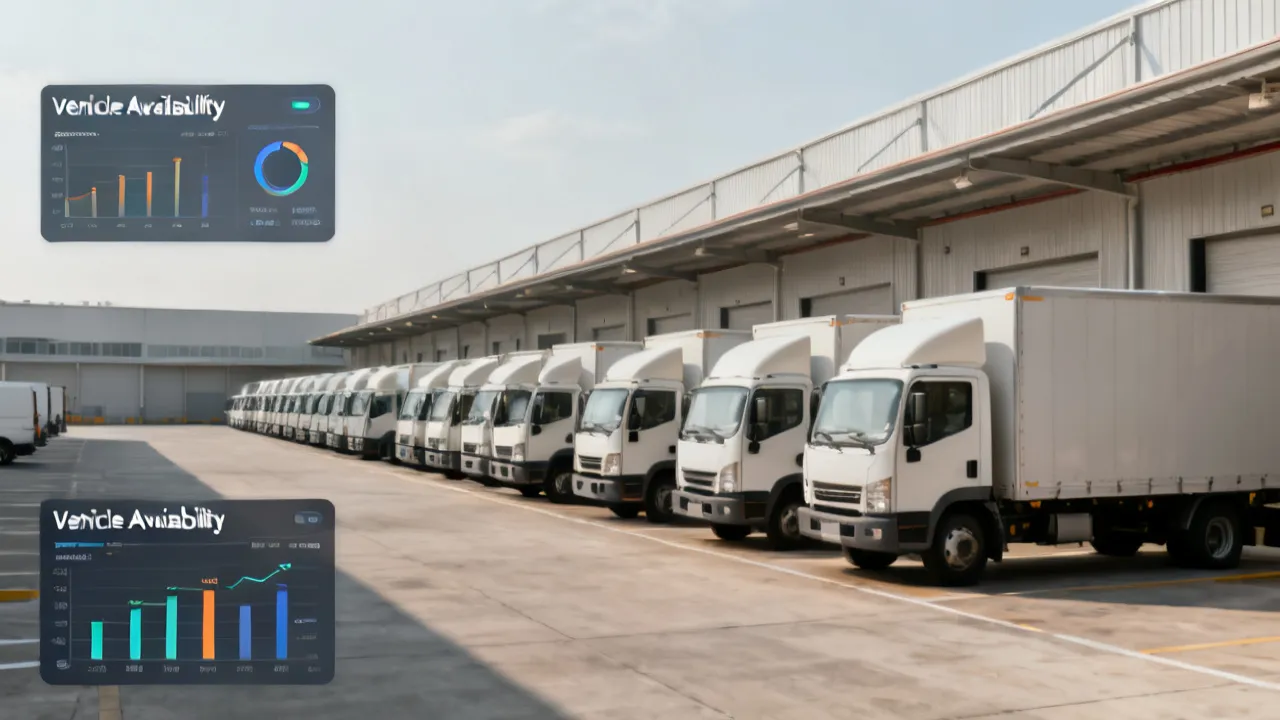
Understanding Vehicle Availability for Smarter Sourcing

Vehicle Availability: Expert Guide for Smart Planning

Vehicle Availability Guide for Smarter Fleet Planning

Vehicle Availability: How to Buy a Car on Sale

Understanding Vehicle Availability for Smart Rental Decisions
Vehicle Availability is the deciding factor behind cost, timing, and service quality in car rentals. This guide explains—objectively—what “availability” means, how it’s managed across suppliers, what conditions affect inventory, and how to plan around demand and lead times. You’ll also find a comparison-style checklist, step-by-step sourcing guidance, and practical FAQs to reduce uncertainty.
Vehicle Availability Guide for Informed Inventory Decisions
This guide explains how Vehicle Availability is tracked, validated, and communicated when you are planning a purchase or fleet booking. It provides objective background on why inventory visibility matters—covering sourcing timelines, supplier reliability, and demand variability—so you can compare options and set realistic expectations for delivery and documentation.
How to Manage Vehicle Availability for Rentals
This guide explains how to manage vehicle availability for rentals with an expert, operations-focused approach. It defines Vehicle Availability in practical terms, reviews demand and supply drivers, and outlines how inventory checks, scheduling, and supplier coordination reduce downtime. You’ll also find comparison guidance, requirements, and FAQs to support consistent service delivery.
Understanding Vehicle Availability for Smarter Fleet Planning
This guide explains how Vehicle Availability is measured, monitored, and improved so fleets can plan routes, staffing, and maintenance with confidence. Vehicle Availability reflects the number of vehicles that are ready for service within a defined time window, factoring in maintenance schedules, driver capacity, and compliance checks. The objective overview below clarifies why it matters and how to manage trade-offs responsibly.
Understanding Vehicle Availability for Smarter Sourcing
This guide explains how Vehicle Availability is assessed, confirmed, and managed when you’re sourcing cars through suppliers. You’ll learn objective ways to evaluate inventory readiness, lead times, and documentation requirements, plus practical decision criteria for buyers and fleet managers. Background context covers why real-world availability often differs from online listings.
Vehicle Availability: Expert Guide for Smart Planning
Vehicle availability is the key factor behind smooth rentals, fleet scheduling, and delivery commitments. This guide explains what “Vehicle Availability” means in practice, how suppliers manage inventory, what drives real-time supply, and how you can plan responsibly to reduce delays—using clear decision criteria, checklists, and requirements readers can apply across common vehicle categories.
