This guide explains how to use the contact number 04365643355 responsibly for product inquiries, supplier coordination, and order planning. It provides objective background on why verified communication matters, how businesses typically structure pricing and availability discussions, and what due diligence looks like when you’re comparing sources for electronic or accessory items.
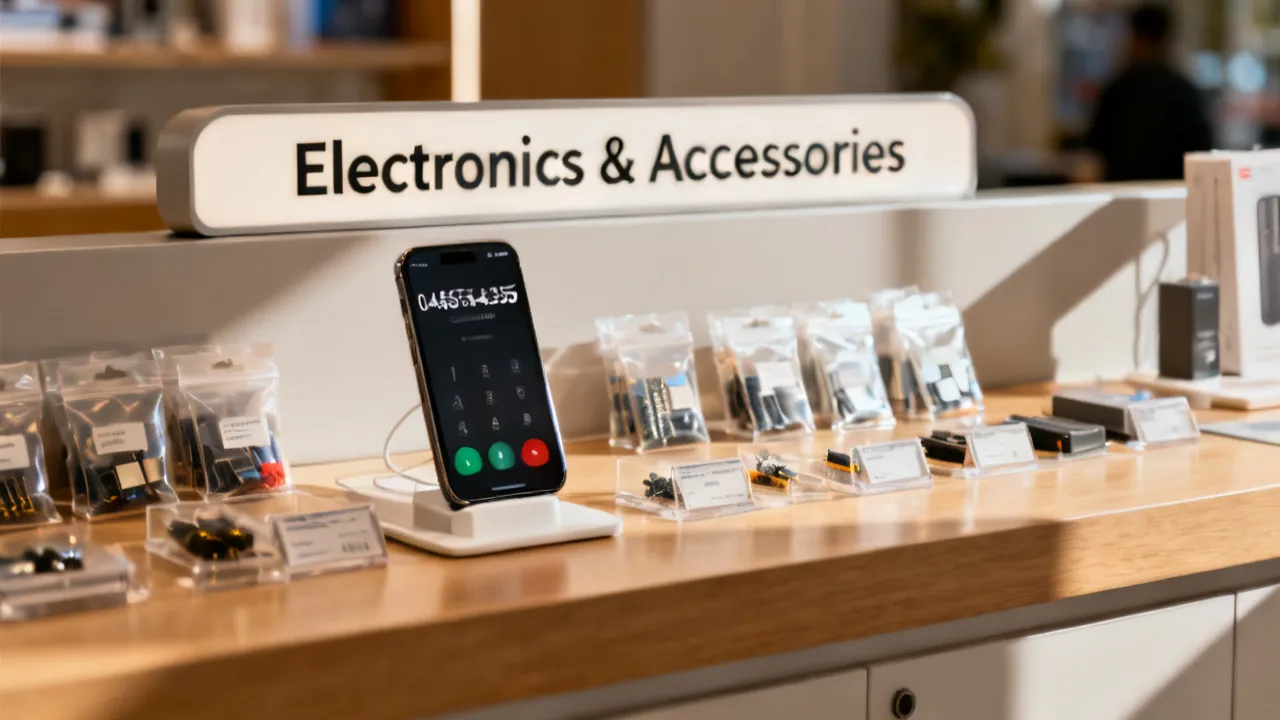
If you need to confirm availability, clarify pricing, or coordinate next steps with a supplier, start by calling 04365643355 with a prepared set of questions and a clear buying intent. The goal is simple: reduce misunderstandings, document key details, and make comparisons using consistent criteria across suppliers. This approach is especially important when you’re evaluating parts, accessories, or other small components where compatibility and lead times can affect the final cost.
Reliable sourcing isn’t just about getting an answer quickly—it’s about getting the right answer quickly. A phone call can be the fastest route to confirm what online text cannot reliably show: which variant is currently available, whether stock matches your required revision, what documentation comes in the box, and how quickly the supplier can actually dispatch after your order is confirmed. When you treat the call as a structured information-gathering step (rather than an unplanned chat), you can move from “maybe” to “confirmed” with much less risk.
In many supply chains, the fastest path to accurate information is direct communication. A phone number such as 04365643355 functions as a practical touchpoint for:
Even when online information exists, real-time questions on the phone typically reveal constraints that are not visible in listings—such as minimum order quantities, variant differences, or documentation requirements for business customers.
From a procurement perspective, speed matters, but speed without verification can be expensive. Calling 04365643355 helps you verify the operational details that influence cost and outcomes: what’s actually available today, what revision you will receive, whether there are substitutions, and how the supplier handles exceptions (for example, if the exact part is delayed or requires confirmation from their inventory team).
Another reason phone contact matters is decision control. If you have a deadline—like a repair job scheduled for a specific day, an installation window, or inventory replenishment—you need answers that allow you to plan. A supplier conversation can help you lock in a timeline, reserve stock (if the supplier offers that option), and avoid losing critical project time to back-and-forth.
The provided keywords include a numeric reference—04365643355—and surrounding placeholder text. Because the non-numeric keyword fragments were not explicitly defined, this guide focuses on what can be verified and used immediately: the role of a supplier contact number and the process you should follow when reaching out for sourcing, quoting, and order preparation. In other words, the emphasis is on how to communicate and how to compare responses objectively.
When you see a numeric contact reference embedded in an otherwise general prompt, it usually means the “action step” is the same for many users: use the number as the direct entry point to the supplier’s real-world inventory and quoting process. The guide therefore stays practical and repeatable, ensuring that you can apply it whether you are sourcing a component for a single device, setting up a small batch order, or coordinating procurement for a larger team.
To make this approach work reliably, you should treat each call to 04365643355 as an opportunity to collect comparable data points. Even if you contact multiple suppliers, your internal evaluation becomes far easier when you capture the same key fields each time: item specs and revision, availability status, quote breakdown (item + logistics + taxes/fees), lead time and dispatch method, warranty terms, and payment conditions.
Industry top practice is to ask questions in a sequence that protects your timeline. Here is a proven ordering of topics:
For example, if you’re sourcing an accessory, don’t describe it only by its role (e.g., “a replacement cable”). Instead, ask: the connector type, cable length, interface version, voltage or current rating (if relevant), and whether it supports your specific device revision. If you have part numbers, quoting becomes dramatically faster when you share them upfront.
Availability questions should be specific: ask what quantities can be allocated today, whether there are multiple warehouses, and whether the “in stock” status can be reserved for your order. If the supplier says it’s not currently in stock, ask for the expected replenishment date and how likely it is to change.
Quotes can be misleading when they bundle costs differently. Ask for a clear line-item breakdown so you can compare across suppliers. If they give you a single “all-in” price, request the breakdown anyway—because warranty terms and delivery scope may vary behind the scenes.
Lead time isn’t always the same as dispatch time. Ask for both: when they will dispatch after receiving payment, and the typical transit duration to your location. If the supplier uses multiple shipping carriers, ask which one they will use for your order and whether tracking is provided.
This is where your purchase becomes easier to support later. If you require proof of purchase, warranty eligibility, or traceability, ask what documentation is included and what details are written on the invoice or warranty card.
This sequence minimizes back-and-forth. It also helps you compare supplier quotes on the same basis, which is essential for objective decision-making.
When suppliers quote differently, it is often due to non-obvious factors—such as packaging standards, warranty coverage, compatible revisions, and shipping options. From an industry perspective, treat pricing as a bundle of terms rather than a single number.
When you receive a response, separate the quote into consistent categories so that you can evaluate it objectively:
Important: Because no specific price amount, supplier identity, or location-based vendor details were provided in the prompt, this guide does not invent numbers. Instead, it gives a structured approach that you can apply to any supplier conversation—including ones initiated via 04365643355.
To make comparisons even fairer, also ask about quote validity and substitution policy. Some suppliers quote at a promotional rate but require confirmation within a short time window. Others may offer “equivalent” parts if the exact variant is unavailable; for compatibility-critical items, substitutions can create downstream issues. By clarifying these topics, you avoid surprise costs and avoid receiving something you cannot use.
Also consider the “total cost of ownership” even for small items. If a part fails or arrives late, your cost may include labor time, downtime, shipping reorders, and return handling. A slightly higher unit price with a stronger warranty and reliable dispatch schedule can actually be cheaper overall. Your phone call to 04365643355 is the moment to surface these tradeoffs.
For electronics and accessory procurement, the very common source of problems is mismatch: an item may be “similar,” but not identical in revision, connector type, or operational requirements. A well-run supplier conversation should help you avoid this.
To reduce risk, ask for one or more of the following:
If a supplier cannot provide clear specifications, you should treat that as a signal to slow down and request additional evidence before placing a larger order.
Risk control also includes asking about what happens when something goes wrong. For example:
Even if you’re purchasing a “small component,” risk control should not be small. Many procurement incidents start with small mismatches that appear acceptable at first glance but become expensive after installation attempts or system testing.
Below is a practical process designed for busy buyers—whether you’re an individual purchasing accessories or a business coordinating replenishment.
Preparation turns a phone call into a controlled workflow. Use this checklist to get ready:
If you have more than one possible item version, write down your decision criteria so you can choose quickly once the supplier confirms what they can supply.
A good approach is to ask questions in an order that supports decision-making. Keep notes and confirm key details by repeating them back. For instance:
If the supplier provides information verbally, ask them to follow up with a written quote via email or messaging. Written confirmation is especially useful when multiple people are involved in approval.
After speaking with 04365643355, do not immediately approve based only on the verbal conversation. Validate the details you captured and compare them against your requirements:
If anything is unclear—especially compatibility—you should ask a follow-up question before purchasing. This avoids the costly scenario where the item arrives but cannot be used.
| Pathway | What you get | What to verify | Top for |
|---|---|---|---|
| Call-and-quote via 04365643355 | Real-time availability, quick spec clarification, immediate Q&A | Compatibility, lead time, item revision, quote breakdown (item + delivery + terms) | Time-sensitive purchases and compatibility-critical items |
| Online listing inquiry | Basic descriptions and typical pricing indicators | Whether the listing matches your exact version; whether stock is current | Early-stage research before contacting suppliers |
| Bulk procurement coordination | Tiered pricing and consolidated logistics | Minimum order quantity, batch consistency, warranty handling for larger volumes | Businesses planning replenishment cycles |
| Distributor-to-manufacturer verification | Higher confidence on specifications and documentation | Traceability and warranty eligibility through the correct channel | Regulated or documentation-heavy procurement |
To reduce friction, consider preparing a short “request sheet” you can read from during the call. A request sheet might include: item identifier, quantity, required version, delivery window, warranty expectations, and your preferred ordering method (deposit + invoice, credit terms, or pay-at-dispatch). The clearer you are, the more likely you’ll receive a quote that’s actionable immediately.
From an operations and procurement standpoint, suppliers usually respond top when buyers provide context. In competitive markets, sellers must allocate inventory and staff time efficiently; a caller who provides precise details allows the supplier to route the request to the correct internal channel—inventory, sales quoting, or technical support.
Common patterns include:
These patterns are not “tricks”—they’re operational realities. Your objective is to align your request with how the supplier works so you receive accurate, comparable outcomes.
In practice, if you call 04365643355 and ask for a quote without giving enough specs, you may trigger multiple internal handoffs. That can lead to longer response times and quotes that are later revised due to missing technical parameters. A structured approach avoids that issue.
It’s also common for suppliers to ask whether the purchase is for resale, internal maintenance, or a project. That context can affect documentation requirements and warranty handling. If you’re buying for a business, mention whether you need an invoice with a specific company name, tax details, or purchase order reference.
Open with the exact item you need, your quantity, and the compatibility requirement (model/device). Then ask for current availability and a quote breakdown covering item cost, delivery, and payment terms.
If you want to sound organized, you can start with something like: “I’m looking for [item/model], revision [if known], quantity [X]. Can you confirm availability and provide an all-in quote including delivery and warranty terms?”
Request the item’s specification details—part/model number, revision/variant, and any compatible device list. If descriptions differ, ask for photos of labels or documentation that identifies the exact version.
A helpful tactic is to ask each supplier to use the same identifier format in their quote: for example, quote the part number exactly as printed on the packaging or as listed in the manufacturer’s documentation. If the supplier cannot provide that level of identification, treat the quote as preliminary.
Yes. Ask for warranty duration, coverage scope, and how claims are handled (including whether you must return the item and who pays shipping for the return).
Also ask whether the warranty is tied to the invoice or purchase channel. Some warranties require proof of purchase from authorized channels; others require serial/lot documentation. Knowing this upfront can save you from warranty denial later.
Have your target model/device, required quantity, desired delivery window, and any documentation requirements ready. If you have a previous invoice or label photo, keep it available for reference.
Additionally, if you have constraints like size, connector type, color, or power rating, note them explicitly. Suppliers can often quote quickly when they know your constraints clearly.
They can, especially if stock is limited or if the item requires replenishment. That’s why you should ask for the supplier’s lead time assumptions and request a confirmation timeline after placing the order.
Ask whether the lead time is “best case” or “typical,” and whether it includes processing time (order handling, picking, packing). If you have an installation date, ask the supplier if they can meet it reliably.
Respond with the requested specifications promptly and ask follow-up questions to ensure clarity. If there is disagreement about compatibility or revision, pause and request a written confirmation of what will be supplied.
It’s acceptable to ask for written confirmation even for small orders. Written clarity prevents miscommunication when multiple parties are involved or when the supplier’s internal notes are updated after your call.
Online details are useful for initial research, but they may not reflect current stock, variant differences, or updated pricing. A direct conversation—such as via 04365643355—can confirm what matters for your order.
Online listings might also show generic images or older packaging. A phone call can verify what you will receive today, which is often the difference between “works” and “doesn’t match.”
Record the agreed item identifier/specs, total price components (item + delivery + taxes/fees), expected dispatch date, warranty terms, and payment conditions. This helps prevent errors later.
If possible, request a written quote. If you can’t get a written quote, send a follow-up message summarizing what was agreed and ask for confirmation. This creates a paper trail that can be valuable if you need to resolve disputes.
Before you commit, use this checklist. It is designed to catch the very common procurement failures:
To make the checklist even more effective, add two operational checks:
Sometimes the hardest part is not knowing what to ask—it’s knowing how to ask it quickly and clearly. Below is a sample script you can adapt when calling 04365643355. Replace the bracketed sections with your details.
Opening:
“Hi, I’m calling to source [item name/model]. I need [quantity] units. It must be compatible with [device/model/application]. Can you confirm availability?”
Compatibility confirmation:
“Can you tell me the exact specification and revision/variant you will supply? If you have reference photos of the label/packaging, could you share them?”
Pricing:
“Please provide a quote breakdown: item unit price (and bulk tiers if applicable), taxes, and delivery/handling costs. Also tell me what the payment terms are and whether you can issue an invoice with my required details.”
Lead time:
“What is the estimated lead time from order confirmation and payment to dispatch? How long does shipping typically take, and do you provide tracking?”
Warranty and documentation:
“What warranty coverage do you provide (duration and claim process)? What documentation will be included with the order—invoice, warranty card/terms, and any lot/batch information?”
Close:
“Based on everything you’ve confirmed, I’d like to proceed with [quantity] if the specifications match. Can you send the quote in writing so I can review and confirm the next step?”
This script aligns with how suppliers operate internally: it routes your request toward the correct teams (inventory, sales quoting, technical verification) and encourages written confirmation at the end.
Even with a disciplined approach, sourcing can encounter predictable issues. Knowing the pitfalls lets you ask preventive questions while calling 04365643355.
Sometimes a supplier can claim availability, but the available units may be a different revision than what you require. This is common when manufacturers update versions without obvious public labeling. Your fix is to ask for:
Then, confirm in writing what will be dispatched. If they can’t provide revision clarity, treat it as a risk and ask for alternatives.
A quote might look attractive as a unit price but become expensive after shipping and handling. To prevent this, request:
If possible, ask for a combined “total delivered cost” figure. Ensure it includes taxes/fees consistent with your location requirements.
Warranty terms can exclude certain types of usage, installation environments, or power conditions. Ask for:
For business procurement, also ask whether warranty is honored if the item is purchased through the supplier via the phone order route.
Lead times can shift due to replenishment cycles, customs processing (if relevant), or carrier scheduling. To control timeline risk, ask:
If your project has a hard deadline, ask whether they can prioritize picking/dispatch or reserve stock for a short period while you confirm payment.
Some suppliers may propose a substitute if the exact item is delayed. Substitutions can be acceptable only when the substitute is functionally compatible and meets your specs. To prevent unwanted substitutions, ask:
If you require an exact item, state it clearly at the start: “I need the exact part number/revision. Please confirm that no substitution will occur without my approval.”
Not all suppliers communicate with the same clarity. While pricing matters, responsiveness and clarity are often predictive of future cooperation during delivery issues or warranty claims.
After your call, evaluate the supplier on:
If a supplier gives unclear answers or avoids specifics, it may not necessarily mean bad intent, but it does mean higher risk for you. Your procurement time should be protected by requiring clarity.
At some point, you’ll need to decide: proceed with this supplier, or continue sourcing. Use decision thresholds to make the process objective.
Examples of objective thresholds you can use include:
If you reach a point where the supplier cannot meet your thresholds, your best action may be to continue contacting other providers (or request alternatives such as different revisions, compatible equivalents, or different delivery methods). A structured approach prevents impulsive purchasing based on incomplete information.
Calling 04365643355 doesn’t have to be purely a “take-it-or-leave-it” process. Negotiation can be collaborative when it’s grounded in transparent requirements. Practical negotiation topics include:
Keep negotiation anchored to risk control: if you’re paying more for better warranty or faster dispatch, make sure it’s explicitly reflected in the quote.
If you’re purchasing for a company, you often need additional steps beyond a simple consumer order. When you call 04365643355, consider asking about:
These details can matter for audits, warranty claims, and internal asset tracking. If your organization requires documentation, ask early so the supplier can prepare the correct paperwork.
If the timeline is tight—such as repairs needed for an event, production downtime risk, or a fixed installation schedule—ask priority questions. When calling 04365643355, focus on:
Time-sensitive procurement benefits from rapid decision cycles. If you receive all needed details in the first call—specs, total price, lead time, warranty—place the order promptly. Delays in decision-making can erase the advantage of fast sourcing.
For compatibility-critical components—where an incorrect item could damage equipment or prevent operation—be stricter than usual. When calling 04365643355, request:
If the supplier can provide pre-shipment verification or technical documentation, it can reduce your risk significantly. When specifications are unclear, treat it as a barrier, not a minor inconvenience.
It can be tempting to skip documentation for small accessory orders. However, recordkeeping is what protects you when a warranty claim or replacement request becomes necessary.
After your call to 04365643355, ensure you keep:
Digital recordkeeping (messages, email PDFs, or an internal procurement log) makes it easier to resolve disputes. It also helps when you reorder later because you can compare your current quote against your past order specifications and pricing.
When you contact 04365643355 to source an item, your success depends less on luck and more on method. Prepare your requirements, ask structured questions, and compare responses using consistent criteria—specifications, availability, total cost, lead time, and warranty terms. Following this disciplined approach supports faster decisions while protecting you from compatibility mistakes and unclear pricing structures.
In a procurement environment, clarity is a currency. A phone call can quickly provide the missing context that turns uncertainty into confirmation. By capturing details during the call and validating them afterward, you create a repeatable sourcing workflow that you can use for future purchases—especially when you need dependable, compatible components delivered on time.
“Calling 04365643355 to confirm product specifications, availability, and total pricing terms before purchase.”
A Guide to Cost-Efficient Small Electric Cars for Seniors

Mastering Debt Consolidation: Boost Your Credit Score and Manage Interest Rates

Your Guide to Loans, Credit Checks, and Interest Rates

Affordable Independent Living: Finding the Right Senior Housing

Guide to Senior Living Apartments: Affordable and Comfortable Environments

Leasing a Car: Expert Tips for Your Next Vehicle

Maintaining Oral Health After Tooth Loss with Dental Implants

Maintaining Oral Health with Dental Implants for the Elderly

Ryugfiih: Supplier Insight and Procurement Guide

Understanding Pix9691133599 and Reliable Sourcing
This guide explains what Pix9691133599 likely represents and how to approach procurement responsibly. It reviews the role of unique product identifiers in modern listings, why suppliers matter for traceability, and how buyers can validate listings through objective checks. The article uses professional sourcing principles, focusing on requirements, due diligence, and practical evaluation criteria.

Understanding Key Product Code 35868272 for Procurement
This guide explains how to evaluate product code 35868272 in procurement decisions, focusing on supplier verification, pricing logic, and documentation readiness. Objectively, the keywords relate to product identification, sourcing consistency, and compliance practices. You’ll also find a structured comparison table, step-by-step requirements, and practical FAQs designed to support responsible purchasing without speculation.

Understanding Supplier Sourcing and Price ID 35868272
This guide explains how to evaluate supplier sourcing, product identification, and pricing using ID 35868272, with an objective framework for procurement decisions. Background sections clarify how supplier details, part identification practices, and pricing signals work in real procurement environments, helping readers separate process quality from marketing claims while planning next steps.

Understanding Product Sourcing with Identifier 35868272
This guide explains how to evaluate a supplier and confirm product authenticity when an identifier such as 35868272 is referenced in procurement. It provides objective background on sourcing workflows, verification practices, and documentation standards. You’ll also find a practical comparison table, evaluation steps, conditions to meet, and FAQs to support informed purchasing decisions.

Understanding Qwertyuiop Supply Sourcing Essentials
This guide explains how to evaluate Qwertyuiop-related sourcing using clear decision criteria, from supplier vetting and specification checks to pricing structure and risk controls. Objectively, “Qwertyuiop” functions here as a placeholder term representing a catalog item or process category, while empty keywords suggest missing product metadata that must be confirmed with the supplier.

Qwertyuiop Supply Guide and Supplier Considerations
This guide explains Qwertyuiop with an objective, market-aware view of sourcing and supplier selection. The term “Qwertyuiop” is used here as a reference keyword for the kind of item or dataset buyers may evaluate during procurement. Background: buyers typically compare supplier capability, consistency of specifications, documentation readiness, and total landed cost.
